
Money in Indonesia: Notes, Zeros, and the Occasional Wrong
The first thing we noticed in Bali wasn’t the beaches, the temples, or the monkeys plotting their next snack heist. It was the money. Suddenly, we were millionaires. Congratulations. That 1,000,000 Indonesian Rupiah we withdrew from the ATM? That was about 65 US dollars. Still enough to impress the grandchildren, but maybe not enough to buy them all new iPads.
Cary held the bills up and said, “Well, that was more than I expected for one hundred bucks.” It felt like a lot, but not in a cartoonish way. Within a week, the stack had melted into groceries, fuel, and coffee.
When someone said our dinner cost 250,000, it wasn’t a scam, it was twelve bucks.
The Colorful World of Rupiah and Those Pesky Zeros
Indonesia’s Rupiah (IDR) featured bright colors, big numbers, and enough zeros to make our calculator sweat.
Common bills were 1,000 • 2,000 • 5,000 • 10,000 • 20,000 • 50,000 • 100,000
The real curveball was punctuation. In Indonesia, a dot meant thousands, and a comma meant decimals. So 100.000 wasn’t “one hundred point nothing.” It was one hundred thousand.
Menus added another twist. Prices often showed up as 85 or 25, like a bargain-bin sale. What they really meant was 85.000 and 25.000. That plate of noodles we thought was 25 Rupiah? Nice dream. Try 25,000.
The Rupiah was colorful, dramatic, and a little sneaky. But once we cracked the code, it was easy to roll with.
The Vendor and the Wrong Note
The first time I tried to pay at a stall, I pulled out what I thought was 20,000 Rupiah. The vendor took the note, looked at me, then at Cary, then back at me.
Cary whispered, “What did you hand him?”
“I don’t know, twenty?”
“It says two. Two thousand.”
I stood there expecting change while the poor man waited for the right bill. Once I corrected it, everyone chuckled. That was the day I learned Indonesian notes could play tricks on tired eyes.
Cash Was Nice, But Plastic Was Nicer
We discovered quickly that credit cards worked almost everywhere, which saved us from carrying too much cash. For warungs and small stalls, we kept some bills on hand.
Big grocery stores like Grand Lucky and Tiara in Bali happily swiped our cards. But there was always a catch. The clerks asked if we wanted to pay in dollars or Rupiah. Rookie mistake if we said dollars, we got hit with a double exchange. We always chose Rupiah.
Then came the quirk that still made us nervous. Vendors manually typed every number into the machine, which always made me brace for identity theft. To stay sane, I set up text alerts and carried enough backup cards to outfit a poker game.
My phone buzzed every time the card was swiped. Cary smirked. “Face it. That buzz excited you more than the coffee.” I rolled my eyes. “Fraud prevention.” He grinned. “You weren’t addicted. You were just… buzz-curious.”
Some places in Bali will casually add a 2–3% “credit card fee.” It sounds official, like airport taxes or a contribution to the Monkey Temple Relief Fund, but it’s actually against Bank Indonesia regulations. Yes, really. Merchants are not allowed to tack on a surcharge just because you’re using a card.
ATM Survival Guide
ATMs were everywhere, happily spitting out stacks of Rupiah that made us feel like drug lords until we realized it was just enough for dinner.
Luckily, none of our cards ever got swallowed. To play it safe, we kept two Charles Schwab (one of US banks) accounts and only withdrew in the morning while banks were open. If the machine decided to eat the card, we could march to the bank and file a report before panic set in.
Withdrawal limits: usually 2–3 million IDR per transaction. That was about $130–$200, which sounded sadder when we said it in millions.
When you use an ATM in Indonesia, the screen sometimes asks if you want to be charged in dollars instead of rupiah. It looks polite, even helpful. It is not. This is called dynamic currency conversion, and it is basically a way for the bank to sneak in a bad exchange rate while smiling at you.
What to choose to avoid hidden fees - when the ATM asks “Accept conversion? Yes/No” or “With conversion / Without conversion,
Accept conversion? Yes / No → NO
With conversion / Without conversion → WITHOUT CONVERSION
Do you want to be charged in USD? → NO
Would you like to lock in today’s exchange rate? → NO
Exchanging Money: The Pristine Paper Trials
We brought some foreign cash as backup, but here was the rule: notes had to be crisp, clean, and preferably smell like they had just left the printer.
Money changers in Indonesia were notoriously picky:
Old, torn, or wrinkled bills? Rejected.
Scribbled with grocery lists? Lower rate.
Pre-1999 US dollars? Forget it.
For the best rates, we brought $100 bills in mint condition.
Prices That Made Sense
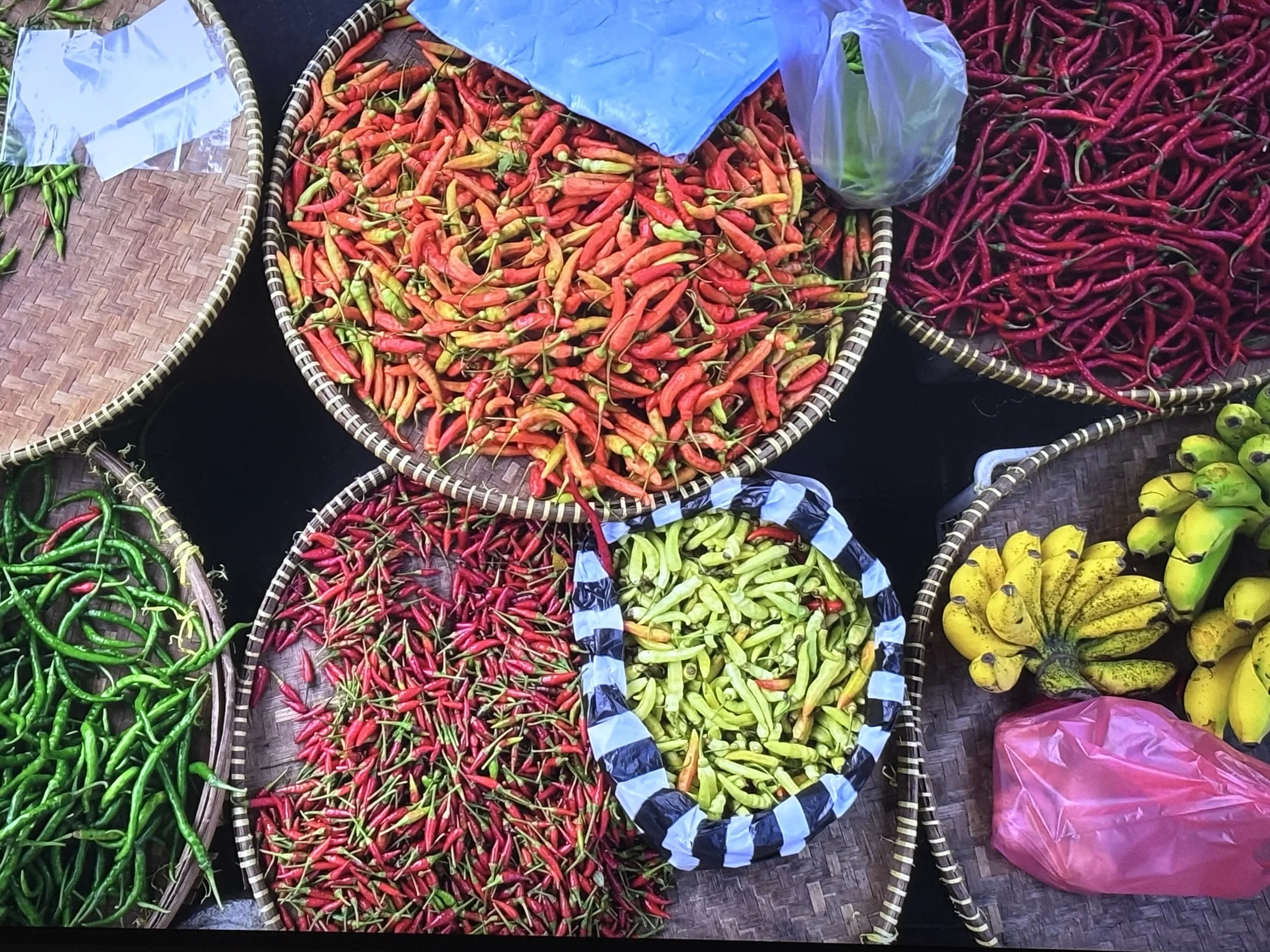
Every morning, I ordered nasi campur from GoFood or GrabFood. Two full boxes—sometimes the food was wrapped in banana leaves—arrived at the door for less than five dollars total. Cary and I sat down, steaming boxes on the table, and laughed about how in the U.S., that amount barely covered a single latte. The price wasn’t unbelievable, just enough to make us appreciate how far the basics stretched there.


The Real Lesson
Indonesia could feel puzzling at first with commas where we expected dots, bright bills that all looked too similar, and ATMs that made us feel briefly wealthier than we were. But after a few days the rhythm set in. The zeros stopped looking strange, the stacks no longer felt intimidating, and handling money became less about calculation and more about moving with the flow of daily life.

Pro Tips for Handling Money in Indonesia
Use Debit Cards That Fought for You
Schwab and Fidelity were gold: no foreign transaction fees, and they refunded every ATM fee. Basically, free withdrawals.Always Pay in Rupiah
When the staff asked, “USD or IDR?” We picked IDR. Saying USD meant falling for a lousy exchange rate wrapped in a polite smile.Bring Backup Cash
Crisp, new USD only. Money changers acted like old bills carried the plague.Credit Cards - Know Your Rights
If a merchant added a surcharge when we paid with a credit card, you can cite PBI 23/6/PBI/2021 (Peraturan Bank Indonesia Nomor 23/6/PBI/2021). It is the legal backbone that protects consumers in Indonesia from being charged extra fees just because they pay by card.No International Transaction Fees
Use a card with no international transaction fees, and always ask to be charged in rupiah.Cost in Bali/Bali Daily Amount to Carry
Around 300,000–600,000 IDR ($20–40 USD) a day covered meals and taxis without bulking up our wallets. Food prices varied wildly depending on where you ate. A solid local meal could cost as little as 65,000 rupiah, while tourist-friendly restaurants often charged around 200,000 per plate. Before heading out, check Google Maps for nearby spots and peek at the menu section—it usually lists prices and helps you avoid surprises.
More travel stories:
You can also use the search function below.