MALAYSIA
Slow Travel in Malaysia: Culture, Food & Heritage for Mature Travelers
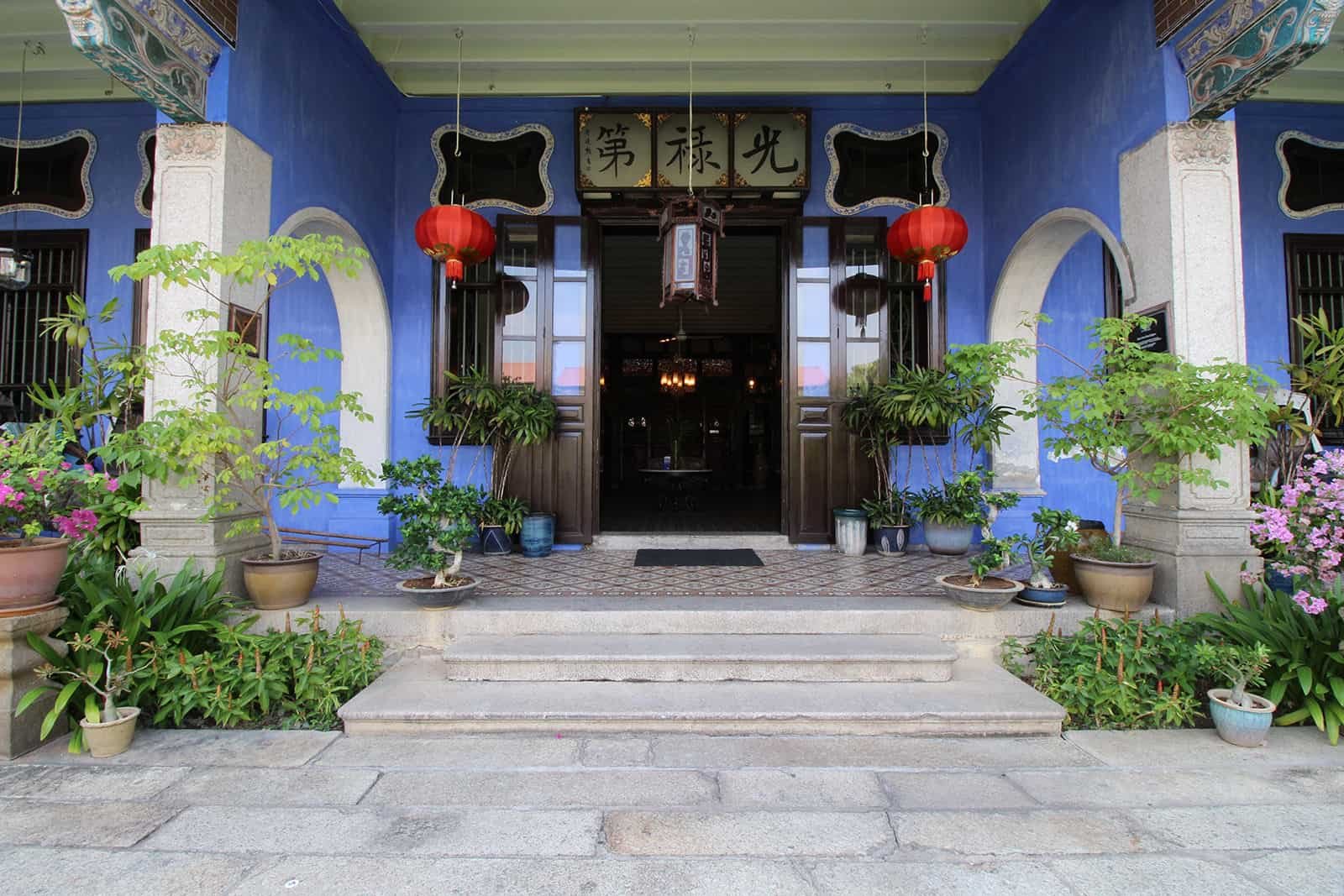
If Malaysia had a motto, it might have been why not all at once. When we came to Penang, the city greeted us with a feast of flavors and history. One moment we were sipping tea over dim sum, the next we were standing in front of a colonial mansion so vividly blue it seemed to glow in the heat.
Malaysia is a living mash-up of Malay, Chinese, and Indian influences, layered over centuries of history still whispering through old mansions and bustling markets. On a single street you could pass a mosque, a Hindu temple, and a Chinese clan house, all stitched together by the scent of satay smoke curling from a food cart. That chaos was the charm. And that is exactly why we love it. Slow travel in Malaysia is not about racing through checklists. It is about wandering without hurry, lingering over long meals, and getting just lost enough to find something unexpected.
Why Malaysia Worked for Slow Travel
Food as a National Sport
Forget golf. Malaysians competed over char kway teow and dim sum bragging rights.Compact but Mighty
Cities like Penang and Malacca were small enough to stroll yet dense with history.Culture in Surround Sound
Where else could you hear the call to prayer, temple bells, and Bollywood tunes on one block?

Best Places to Visit in Malaysia
Penang
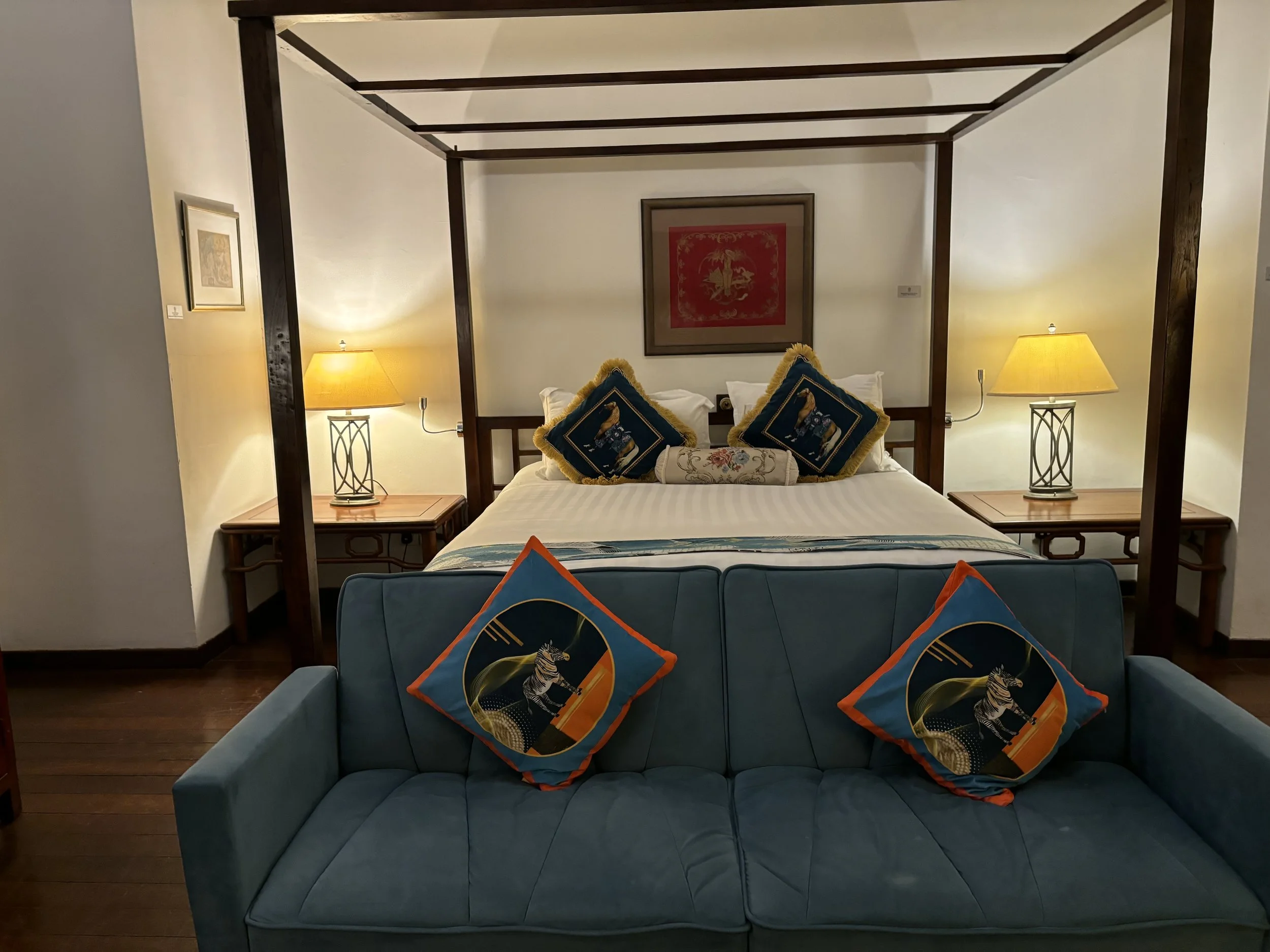
We start with a stay at the Penage Hotel, which greets us with all the “heritage charm” we are promised; plus creaky floors that tell their own ghost stories. From there, we set out to explore. The Georgetown Mansion offers a glimpse into history, though the ever-present staff hovering at our elbows makes us wonder if we have signed up for a guided tour or a surveillance exercise.
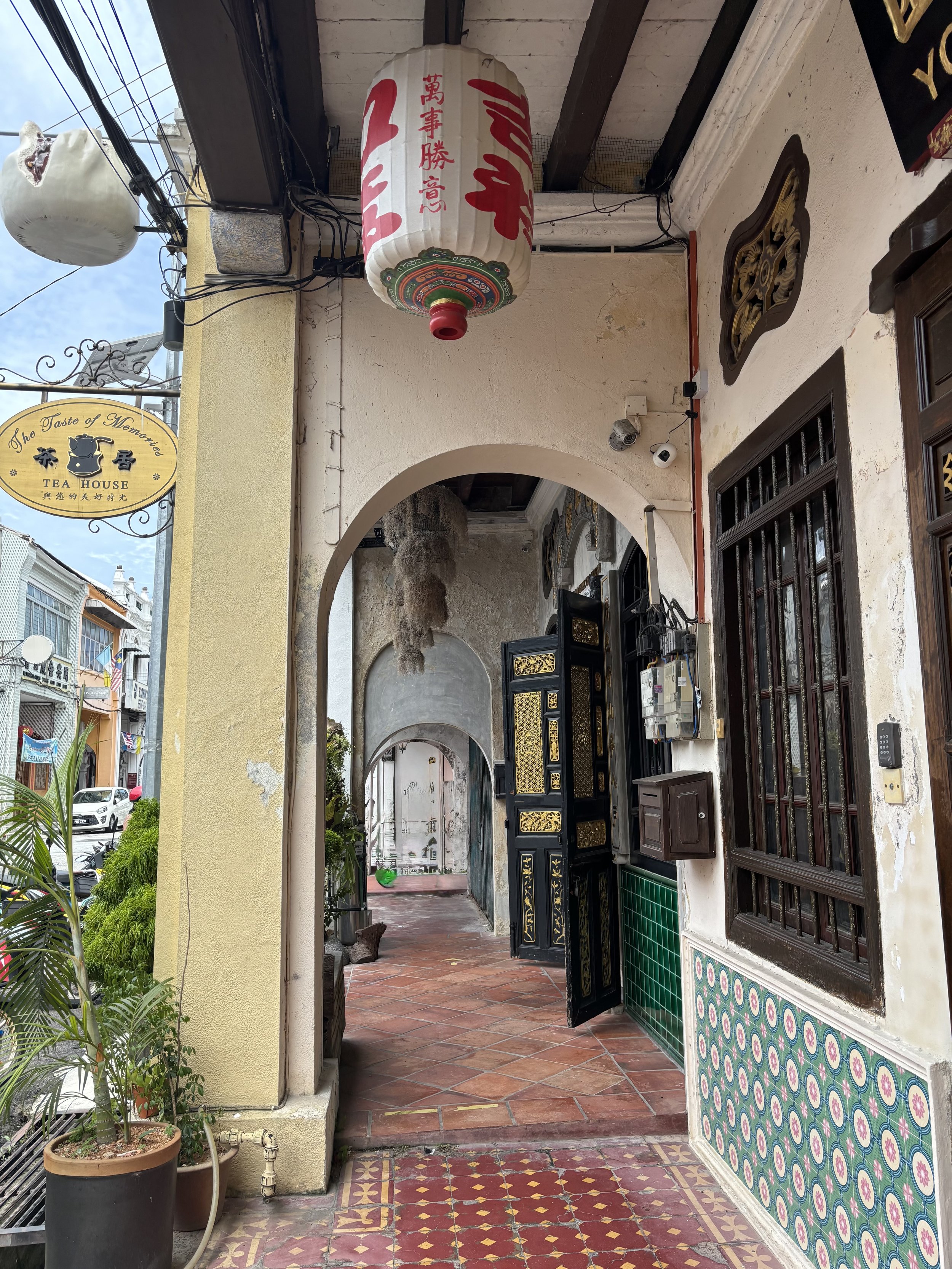
Food is never far behind, so we try out dim sum at the Bao Deck Tea House. What is meant to be a modest breakfast spins wildly out of control, with the lazy Susan and our appetites conspiring until we drift out, happy and heavy… and ready for a long nap.
We ended our stay at the iconic Blue Mansion, that indigo dream splashed across every Instagram feed. Cary attempted to count its endless shades of blue before giving up and ordering yet another coffee. It was a fitting finale; equal parts history, food, and just the right amount of chaos, that summed up Penang perfectly.
Ipoh
Ipoh pops with limestone drama. Sheer cliffs rise like jagged guardians, hiding temples such as Sam Poh Tong and Kek Lok Tong, carved straight into the rock. Inside, incense swirls around gilded statues while outside the hills stretch wide and green. The city streets hum with murals and heritage trails that spill their colonial secrets. The Birch Memorial Clock Tower, Ipoh Railway Station, and all the echoes in between. Concubine Lane steals the show, once the haunt of wealthy merchants and their mistresses, now a carnival of stalls, shops, and snacks that make you forget you only came for a stroll.

Kuala Lumpur
Kuala Lumpur, or as the locals simply call it, KL is the capital of Malaysia. It is famous for a skyline that glitters with ambition. The Petronas Twin Towers stab the sky like giant silver chopsticks, while Menara KL stands nearby like it is saying, “Hey, I’m tall too.” The skyline alone could make you think this city is all glass and steel, but KL has way more personality than a corporate screensaver.
By night, KL ditches the skyscraper suit and drags you straight into Jalan Alor, a street food circus where smoke, noise, and neon all fight for your attention. One minute you are dodging waiters carrying ten plates at once, the next you are eye-to-eye with a mountain of satay sticks. The air smells like char kway teow, nasi lemak, and at least three things you cannot identify but will eat anyway. Nobody comes here for peace and quiet; this is dinner with a side of chaos.
Need a breather? KLCC Park waits right under the towers, all fountains, jogging paths, and families picnicking like the skyscrapers aren’t looming above. For a city this loud, it is shockingly good at giving you a quiet corner when you need one. Food runs the show here.Plastic stools and paper plates one moment, rooftop cocktails with cardamom and ginger the next. KL doesn’t make you choose between cheap eats and fancy dining. It just laughs and says, “Why not both?”
Malacca
Malacca is basically a history buffet. First the Portuguese showed up, then the Dutch, then the British, each leaving behind buildings, recipes, and probably a few hangovers. The result? A city that feels like colonial cosplay, but with better food.
Dutch Square is bright red and selfie-ready, but the real stars are the trishaws: rolling discos covered in Hello Kitty decals, blasting music loud enough to shake your organs.
By night, Jonker Street goes feral. You’ll swear you’re just browsing, then suddenly you’re shoveling chicken rice balls, pineapple tarts, and cendol like you haven’t eaten in days.
History buffs can climb St. Paul’s Hill to see ruins, but honestly the food is the real heritage here. Peranakan laksa will set your face on fire in the best way, and ayam buah keluak looks weird but tastes like witchcraft.
Malacca is small, loud, and impossible not to like. Come for the colonial charm, stay for the snacks, leave with a sugar high.


From Skyscrapers to Satay: Wandering Malaysia the Slow Way
We are just getting started. Slow travel in Malaysia stretches far beyond Penang. The menu here is long, and not just in the metaphorical sense. The food alone could keep us wandering for months, rich curries, smoky satay, char kway teow fried to perfection; and the best part is most of it costs less than a fancy coffee back home.
Kuala Lumpur throws shiny skyscrapers over night markets that smell like satay heaven. Malacca dishes out a colonial remix with Portuguese chicken, Dutch squares, and British leftovers. And Borneo drags us straight into rainforests and orangutan territory, a wild reminder that humans are never actually in charge.
When to Visit Malaysia
Sunshine, Festivals, and Fewer Downpours
Malaysia stays open for business all year, like that one friend who never learned to say no to a plan. The best time to visit really depends on what kind of traveler you are: the sunshine chaser, the bargain hunter, or the person who insists that “rain just adds atmosphere.”
On the west coast of Peninsular Malaysia—home to Kuala Lumpur, Penang, and Langkawi—the weather follows a fairly predictable script. From November through March, the dry season takes the stage, offering clear skies, manageable crowds, and prices that don’t make you flinch. It’s the sweet spot for food pilgrimages, city wandering, and beach lazing without the threat of a sudden tropical rinse.
Come April through October, the Southwest Monsoon sweeps in, bringing bursts of rain that seem to appear out of nowhere, throw a fit, and leave just as suddenly. It’s still perfectly travelable—just with a bit more character. The in-between times, like March or late October into early November, can be a gamble: a mix of sunshine and drizzle, but with the bonus of fewer tourists elbowing their way to the same plate of char kway teow.
When to Avoid (If You Don’t Like Crowds)
Avoid visiting Malaysia during peak local travel times when popular destinations get crowded and hotel prices rise. These periods include:
Late May to mid-June: Malaysia’s mid-year school holidays bring many local families traveling.
Late August to early September: Around National Day (August 31) and Malaysia Day (September 16) holidays, combined with school breaks.
Late December to early January: Year-end holiday season with Christmas and New Year festivities.
Major cultural festivals such as Chinese New Year (between late January and February), Hari Raya Aidilfitri (dates vary yearly), and Deepavali (usually October or November) also attract large crowds and lively celebrations.
Traveling outside these windows typically means fewer tourists, lower accommodation rates, and a more relaxed experience.
What You will Find in Our Malaysia Travel Stories
Honest hotel reviews (yes, even the ones that tested our patience).
Cultural context, the why behind the what.
Food adventures, from smoky street satay to elegant rijsttafel feasts.
Reflections on traveling as a couple over 50 in a land of scooters, ceremonies, and surprises

Pro Tips
Most travelers, including US citizens, need no visa for stays up to 90 days. Passports must be valid for at least six months.
Malaysia runs on its own clock, which means shops and cafes sometimes shut down mid-afternoon. Plan your lunch before 2 p.m. or risk staring at closed shutters with a rumbling stomach.
Spicy means SPICY here. In Malaysia, "not spicy" still packs a kick. If someone asks how spicy you want it, say "very mild" or ask for the sambal on the side. Even a dab of that chili paste can turn breakfast noodles into a fire drill.
Grab is your friend. Download the app (think Uber with extra curry puffs). It is cheap, reliable, and saves you from haggling over taxi fares in the heat.
Set up your eSIM before flying to Malaysia. pour yourself a coffee, and land already connected. Less headache. Sip your coffee, board your flight, and land already connected—no kiosk hunt, no headache.
Use the Malaysia’s government site to sign up for the Malaysia e-visa.
More Travel Stories
This is our Malaysia hub. Right now you will find Penang’s food adventures, Kuala Lumpur’s skyline, and island escapes we cannot stop raving about. Think of it as the rack where our Malaysia stories hang together, so no one has to wonder.
Keep scrolling to see our latest Malaysia posts
PENANG
A growing collection of travel guides and cultural stories from Penang, Malaysia filled with the places we wandered, the moments that made us laugh, and the lessons we picked up along the way.